I’m not quite sure what transpired that lead my Dad to focus on immunology. By the early 1970s he was running a clinical immunology laboratory in a hospital in upstate New York. He attended conferences in his fields, both immunology and microbiology and kept up with his journal reading. As such, he read much of the early research in HIV/AIDs, and probably kept up with this reading at least until a couple of years before he passed. As far as I know, he did not do any HIV/AIDs research but several of his friends did.
Over the years my Dad and I had several occasions to talk about HIV/AIDs, both from the perspective of the research being done at that time and other writings from his immunology journals, and from the point of view of seeing so many fine young people die of AIDs.
I recall one of his last visits with us in New Jersey in June of 1990. It was the weekend of the annual gay pride parade in New York City. We took a train into the city to watch the first hour of the parade before going out for lunch. Our perch was somewhere near 23rd street in the boro of Manhattan (NYC). We got there in time to see the beginning of the parade. Among the early marchers was a rather large contingent of HIV/AIDs groups. Dad was very moved by seeing both the AIDs activist groups as well as all those living with HIV/AIDs. Remember that this was before the widespread use of the various drug cocktails used by those living with HIV/AIDs in the U.S. and other developed countries.
A couple of years later, my dear Dad was dead from complications resulting from a neurological disease.
When I first became acquainted with the Global Aids Interfaith Alliance , I knew that Dad would want to be very involved with GAIA if he were alive. If he were able, he would want to go on one of their trips to Malawi to visit various medical facilities working with HIV/AIDs patients and orphanages with children whose parents have died of HIV/AIDs. I’d like to think that my Dad is one of GAIA’s special angels.
CAL FIRE (CDF) S2T Tanker 71 working Sawtooth Complex Fire (2006)

Sawtooth Complex Fire (Sept. 2006), San Bernardino County CA. Photo Credit: U.S. Forest Service
Thursday, December 14, 2006


Friday, December 08, 2006
My Dad and Africa
I want to pause for a moment and tell you about my Dad, John. You see, in many ways, my Dad is an inspiration for my interest in Malawi. You see my Dad had a Ph.D. in microbiology. I had just turned seven years old when he earned his Ph.D. Around this time; he was offered a post–doctoral fellowship in what was known then as the Congo in Africa. It is possible that my mother mentioned the possibility of living in Africa to my younger sister and I. It seemed so exotic. At the time, the only thing I knew about Africa was that the lions, monkeys and elephants that I saw in cages at the zoo lived wild. I dreamt of seeing African tribesman and wild lions, elephants, and monkeys. A short time later, my mother told us how disappointed she was that Daddy was not going to accept the fellowship. Several years later I recall hearing about some sort of violence and unrest in the Congo. I understood why he didn’t accept the fellowship.
After he earned his Ph.D., he stayed at his university, teaching biochemistry in the med school and doing research. It may have been during this time that he started to shift his research focus to immunology. Later, he ran an immunology lab in a chief medical examiner’s office of another large east coast city before moving to a small city in upstate New York where he ran a clinical immunology lab in one of the local hospitals. My Mom passed in the mid–eighties, my Dad followed a little less than eight year later.
It never occurred to me to ask him about his dissertation research or why he was offered the fellowship in the Congo. After he passed, I found his masters and Ph.D. dissertation in an antique secretary I inherited. I knew that he had left his dissertations in this secretary, when I was ready, I looked to see what he had done his dissertation research on. I don’t know what I never asked him about his dissertation work, perhaps because his life’s work took a very different direction. After he died, I got curious. All I had to do was look in the secretary and read the abstract.
Now, I am not a microbiologist, nor have I taken a microbiology course. But, I knew enough to know that his work was related to Dysentery. The Shigella Flexneri bacterium that was the focus of his research is one of the organisms causing one of the diarrheal diseases sometimes referred to as Dysentery. It wasn’t until over ten years had passed since Dad’s death and I was working on an article on the efforts to supply a safe and clean water supply to a small village in southern Malawi that I made the connection to my Dad’s dissertation work and the fellowship in the Congo that he turned down.
It was when I was reading about water borne diseases that I made the connection about my Dad’s dissertation work. I felt like it was not a coincidence that fate had led me to my interest in southern Malawi. In some ways, I feel like I am finishing the work that my Dad started in the 1950s.
I know that he would be thrilled to know of my interest in working for a safe and clean water supply in Africa and globally. I do believe in angels. he is hovering around me, smilling, as I write this.
After he earned his Ph.D., he stayed at his university, teaching biochemistry in the med school and doing research. It may have been during this time that he started to shift his research focus to immunology. Later, he ran an immunology lab in a chief medical examiner’s office of another large east coast city before moving to a small city in upstate New York where he ran a clinical immunology lab in one of the local hospitals. My Mom passed in the mid–eighties, my Dad followed a little less than eight year later.
It never occurred to me to ask him about his dissertation research or why he was offered the fellowship in the Congo. After he passed, I found his masters and Ph.D. dissertation in an antique secretary I inherited. I knew that he had left his dissertations in this secretary, when I was ready, I looked to see what he had done his dissertation research on. I don’t know what I never asked him about his dissertation work, perhaps because his life’s work took a very different direction. After he died, I got curious. All I had to do was look in the secretary and read the abstract.
Now, I am not a microbiologist, nor have I taken a microbiology course. But, I knew enough to know that his work was related to Dysentery. The Shigella Flexneri bacterium that was the focus of his research is one of the organisms causing one of the diarrheal diseases sometimes referred to as Dysentery. It wasn’t until over ten years had passed since Dad’s death and I was working on an article on the efforts to supply a safe and clean water supply to a small village in southern Malawi that I made the connection to my Dad’s dissertation work and the fellowship in the Congo that he turned down.
It was when I was reading about water borne diseases that I made the connection about my Dad’s dissertation work. I felt like it was not a coincidence that fate had led me to my interest in southern Malawi. In some ways, I feel like I am finishing the work that my Dad started in the 1950s.
I know that he would be thrilled to know of my interest in working for a safe and clean water supply in Africa and globally. I do believe in angels. he is hovering around me, smilling, as I write this.
Friday, December 01, 2006
Reflections on water
It may be ironic that as I write this it is raining. Rain, what some of the arid or semi–arid regions in the world wouldn’t give for the amount of rain we have had this year, about 9 inches above normal. Those of you who have been following my blog will recall the entries that I wrote in June and July about the flooding on the Delaware River in New Jersey and Pennsylvania.
I am not here to write about our abundant rainfall, I am here to write about how my passion for Malawi started. It was about seven months ago and I had started to do background reading and research to familiarize myself with life in southern Malawi. I knew that many people living in less developed regions of the world. I knew that many people in these regions do not have easy access to a clean and accessible water supply near their dwelling. I knew of the various diseases transmitted by dirty water. I knew that the people of these regions were very, very poor. Somehow all this seemed so far away. Up until last spring when I started writing about southern Malawi
It would be arrogant of me to sit here on the east coast of the United States to say that a few months of reading and writing about the people of rural southern Malawi translate into really knowing what life is like for these wonderful people. I can not, even if I should get a chance to go and visit with these wonderful people some time in the future.
But I can have compassion. And I can use the gift of my electronic pen to write of the compassion I have for and how writing about southern Malawi has, I hoped, helped me to not take things for granted. Like the well on my property that supplies us with clean water.
It was around the end of April, and I was taking a break from my research on Malawi. I started to think about what I might or might not plant in my garden in the middle of May after the threat of a freeze had passed. Believe it or not, we were then in our third consecutive month of below average rainfall. I was wondering if we were headed for a dry summer. I wondered whether I should set in new plants or not. I decided not to, to wait awhile.
Suddenly, I thought back to the people in the village in rural southern Malawi that I was writing about. The “problems” of a dry spring seemed suddenly so trivial and unimportant. I thought to myself, what is the worse that could happen if we did have a drought that summer, some of my plants and trees might die. Perhaps we would have to dig a deeper well. But we wouldn’t get sick from drinking dirty water. We don’t have to walk for an hour one–way and wait in a long line at the crack of dawn to get a bucket of water to last the day.
I know that these words sound trite and some of you may be shaking your heads, saying, “Give me a break!” You probably have a point, for I am an expert at what I can white liberal guilt. All I can say is that, suddenly, I began to look at my own use of water differently. And perhaps I can use my “white liberal guilt” for some good, through my writing.
And a few weeks later the rains came.
I am not here to write about our abundant rainfall, I am here to write about how my passion for Malawi started. It was about seven months ago and I had started to do background reading and research to familiarize myself with life in southern Malawi. I knew that many people living in less developed regions of the world. I knew that many people in these regions do not have easy access to a clean and accessible water supply near their dwelling. I knew of the various diseases transmitted by dirty water. I knew that the people of these regions were very, very poor. Somehow all this seemed so far away. Up until last spring when I started writing about southern Malawi
It would be arrogant of me to sit here on the east coast of the United States to say that a few months of reading and writing about the people of rural southern Malawi translate into really knowing what life is like for these wonderful people. I can not, even if I should get a chance to go and visit with these wonderful people some time in the future.
But I can have compassion. And I can use the gift of my electronic pen to write of the compassion I have for and how writing about southern Malawi has, I hoped, helped me to not take things for granted. Like the well on my property that supplies us with clean water.
It was around the end of April, and I was taking a break from my research on Malawi. I started to think about what I might or might not plant in my garden in the middle of May after the threat of a freeze had passed. Believe it or not, we were then in our third consecutive month of below average rainfall. I was wondering if we were headed for a dry summer. I wondered whether I should set in new plants or not. I decided not to, to wait awhile.
Suddenly, I thought back to the people in the village in rural southern Malawi that I was writing about. The “problems” of a dry spring seemed suddenly so trivial and unimportant. I thought to myself, what is the worse that could happen if we did have a drought that summer, some of my plants and trees might die. Perhaps we would have to dig a deeper well. But we wouldn’t get sick from drinking dirty water. We don’t have to walk for an hour one–way and wait in a long line at the crack of dawn to get a bucket of water to last the day.
I know that these words sound trite and some of you may be shaking your heads, saying, “Give me a break!” You probably have a point, for I am an expert at what I can white liberal guilt. All I can say is that, suddenly, I began to look at my own use of water differently. And perhaps I can use my “white liberal guilt” for some good, through my writing.
And a few weeks later the rains came.
Tuesday, November 14, 2006
Global AIDS Interfaith Alliance
In the course of my writing about Malawi and her people, I happened upon a wonderful organization called the Global AIDS Interfaith Alliance . Their mission statement is:
Global AIDS Interfaith Alliance (GAIA) partners with religious organizations in resource-poor countries for community-based HIV prevention and care.
We assist communities in developing locally initiated, planned, and led workshops that create detailed action plans for projects specific to community needs. These grass roots, village-level projects educate high risk groups about the disease, modify sexual behavior, promote voluntary counseling and testing for HIV, foster the social and economic empowerment of women, care for AIDS orphans, provide home-based care of ill persons, improve nutrition, and reverse the stigmatization of people with AIDS. Where medications and treatment are available, projects provide aggressive referral for treatment of opportunistic infections, sexually transmitted diseases, and HIV itself. We assist these projects through small grants and through assisting them with applications to other funding sources when appropriate.
One of the countries that they work in is Malawi. I have had the pleasure of corresponding with a retired physician who has been to Malawi for extended visits on several occasions with GAIA. Our discussions haunt me.
GAIA has a fact sheet on Malawi, with some facts that I did not mention in my earlier post that you may find interesting. I urge you to spend some time on the the GAIA website . And I urge you to look at their video.
Global AIDS Interfaith Alliance (GAIA) partners with religious organizations in resource-poor countries for community-based HIV prevention and care.
We assist communities in developing locally initiated, planned, and led workshops that create detailed action plans for projects specific to community needs. These grass roots, village-level projects educate high risk groups about the disease, modify sexual behavior, promote voluntary counseling and testing for HIV, foster the social and economic empowerment of women, care for AIDS orphans, provide home-based care of ill persons, improve nutrition, and reverse the stigmatization of people with AIDS. Where medications and treatment are available, projects provide aggressive referral for treatment of opportunistic infections, sexually transmitted diseases, and HIV itself. We assist these projects through small grants and through assisting them with applications to other funding sources when appropriate.
One of the countries that they work in is Malawi. I have had the pleasure of corresponding with a retired physician who has been to Malawi for extended visits on several occasions with GAIA. Our discussions haunt me.
GAIA has a fact sheet on Malawi, with some facts that I did not mention in my earlier post that you may find interesting. I urge you to spend some time on the the GAIA website . And I urge you to look at their video.
Thursday, November 09, 2006
More Facts on Malawi
Electricity (lack of), Sanitation, and Source of Drinking Water in Malawi
Source: 2004 Malawi Demographic and Health Survey (Chapter 2 of the Main Report)
Prepared by the National Statistical Office of Malawi
URL: http://www.nso.malawi.net/
93% of all households do not have electricity.
Source of household drinking water:
Piped into dwelling 2.9%
Piped into yard or plot 3.4%
Public tap 13.7%
Open well in yard or plot 2.4%
Open public well 22.6%
Protected well in yard or plot 4.9%
Protected public well 38.6%
Spring 2.6%
River or stream 8.0%
Pond or lake 0.4%
Dam 0.2%
Tanker truck 0.1%
58% of all households are at least a 15–minute walk from the closest water source.
Household sanitation facilities
Flush toilet 3.4%
Traditional pit latrine 79.4%
VIP latrine 1.1%
No facility, use bush or field 16.1%
89% of all households cook with firewood.
Source: 2004 Malawi Demographic and Health Survey (Chapter 2 of the Main Report)
Prepared by the National Statistical Office of Malawi
URL: http://www.nso.malawi.net/
93% of all households do not have electricity.
Source of household drinking water:
Piped into dwelling 2.9%
Piped into yard or plot 3.4%
Public tap 13.7%
Open well in yard or plot 2.4%
Open public well 22.6%
Protected well in yard or plot 4.9%
Protected public well 38.6%
Spring 2.6%
River or stream 8.0%
Pond or lake 0.4%
Dam 0.2%
Tanker truck 0.1%
58% of all households are at least a 15–minute walk from the closest water source.
Household sanitation facilities
Flush toilet 3.4%
Traditional pit latrine 79.4%
VIP latrine 1.1%
No facility, use bush or field 16.1%
89% of all households cook with firewood.
Facts on Malawi
These facts on Malawi were forwarded to me by someone that I have cooresponded with about Malawi. I will let these facts speak for themselves.
Current Facts about Malawi
"Pocket World in Figures, 2006 Edition"
published by The Economist. (London: Profile Books.)
Highest population per doctor: Malawi ranks 1st in the world at 88,321.
Most road accidents (# people injured per 100m vehicle-km): Malawi ranks 1st in the world at 2,730. (Rwanda is a distant second at 1,764.)
Lowest purchasing power (US = 100): Malawi ranks 2nd in the world at 1.6
Maternal mortality rates: Malawi ranks 3rd in the world with 1,800 maternal deaths per 100,000 live births, behind Sierra Leone and Afghanistan
Lowest GDP per head: Malawi ranks 5th in the world at $140
Lowest median age: Malawi ranks 6th in the world at 16.3
Lowest life expectancy: Malawi ranks 7th at 41.1.
Lowest female life expectancy: Malawi ranks 7th at 40.6 (women live shorter lives than men in this country.)
Highest foreign debt, as % of goods and services: Malawi ranks 8th at 660%
HIV/AIDS prevalence among 15 - 49 year olds: Malawi ranks 8th at 14.2% of population in this age range
AIDS deaths per 100,000 of population: Malawi ranks 8th at 694.
Highest death rates: Malawi ranks 12th at 19.9 per 1,000 population
Crude birth rates, number of live births per 1000 people: Malawi ranks 14th at 44.6
Highest fertility rates in the world: Malawi ranks 16th at 6.1.
Highest infant mortality: Malawi ranks 16th at 102.6 per 1000 live births
Current Facts about Malawi
"Pocket World in Figures, 2006 Edition"
published by The Economist. (London: Profile Books.)
Highest population per doctor: Malawi ranks 1st in the world at 88,321.
Most road accidents (# people injured per 100m vehicle-km): Malawi ranks 1st in the world at 2,730. (Rwanda is a distant second at 1,764.)
Lowest purchasing power (US = 100): Malawi ranks 2nd in the world at 1.6
Maternal mortality rates: Malawi ranks 3rd in the world with 1,800 maternal deaths per 100,000 live births, behind Sierra Leone and Afghanistan
Lowest GDP per head: Malawi ranks 5th in the world at $140
Lowest median age: Malawi ranks 6th in the world at 16.3
Lowest life expectancy: Malawi ranks 7th at 41.1.
Lowest female life expectancy: Malawi ranks 7th at 40.6 (women live shorter lives than men in this country.)
Highest foreign debt, as % of goods and services: Malawi ranks 8th at 660%
HIV/AIDS prevalence among 15 - 49 year olds: Malawi ranks 8th at 14.2% of population in this age range
AIDS deaths per 100,000 of population: Malawi ranks 8th at 694.
Highest death rates: Malawi ranks 12th at 19.9 per 1,000 population
Crude birth rates, number of live births per 1000 people: Malawi ranks 14th at 44.6
Highest fertility rates in the world: Malawi ranks 16th at 6.1.
Highest infant mortality: Malawi ranks 16th at 102.6 per 1000 live births
Thursday, November 02, 2006
Malawi geography
Malawi is a landlocked country in what is often referred to as the sub-saharan region of Africa. That is, the region below the Saharan desert. Located not far from the east coast of Africa, it borders Mozambique, Zambia, and Tanzania. If you are looking at this map of Africa, Malawi is small enough that you may not find it unless you know where to look.. So, I will offer a couple of hints that I hope will be helpful. First, find the equator, running through the middle of Africa. Look below (south) of the equator. Go to the east coast and look for Tanzania. If I have the correct compass points in mind, Tanzania lies northeast of Malawi. Translation, Malawi lies to the left and underneath Tanzania. In terms of its total area, Malawi is slightly smaller in size than the State of Pennsylvania in the U.S.

Natural resources include: limestone, arable land, hydropower, unexploited deposits of uranium, coal, and bauxite.
Current environmental issues include deforestation; water pollution from agricultural runoff, sewage, and industrial wastes; and silt buildup in spawning grounds that endanger fish populations.
The climate is subtropical. There are two seasons in Malawi, rainy and dry with the rainy seasons running from November to May. During the rainy season, roads serving the more remote villages may be impassable. Above ground water sources may dry up during the dry season.
A good summary of information on Malawi may be found in the World Factbook entry on Malawi. Most of the information included here including the map reproduced above is from the World Factbook.

Natural resources include: limestone, arable land, hydropower, unexploited deposits of uranium, coal, and bauxite.
Current environmental issues include deforestation; water pollution from agricultural runoff, sewage, and industrial wastes; and silt buildup in spawning grounds that endanger fish populations.
The climate is subtropical. There are two seasons in Malawi, rainy and dry with the rainy seasons running from November to May. During the rainy season, roads serving the more remote villages may be impassable. Above ground water sources may dry up during the dry season.
A good summary of information on Malawi may be found in the World Factbook entry on Malawi. Most of the information included here including the map reproduced above is from the World Factbook.
Tuesday, October 31, 2006
Platelet donor
I am starting to work on my next entry about Malawi, about geography including a map. I hope to post this tomorrow or the next day.
In the meantime, some of you may recall that I wrote about making a blood donation sometime last summer. I think this was in early August. About ten days ago, the New Jersey Blood Services had an apheresis donor appreciation event that I attended. A nice buffet breakfast on a very rainy Friday. Considering that the weather was pretty awful, there it was very well attended. Hearing the people from NJ blood services talk as well as a couple of the recipients got me thinking about why I am an apheresis donor.
As I understand it, an apheresis donor is another word for a platelet donor. Platelets are the component of our blood that, among other things, form clots when we cut ourselves. Patients receiving certain forms of chemotherapy, for example, need lots of platelets as do certain newborn infants.
Many of you have probably donated whole blood at least once, perhaps in an employer or school sponsored blood drive. Whole blood donations take about 20 to 30 minutes. After your intake, you lie on a table and make your donation.
Platelets are one component of whole blood, another being red cells and plasma. Platelet donations take about one hour, not including intake. I donate double platelets, which takes a little longer. On top of donating double platelets, I can make a red cell donation about every 60 days.
Why do I do this? I do it because of people I know who live with cancer, or are in need of some form of transplant, or have received a transplanted organ. A couple of people who fit in one of those categories have touched my lives in special ways. Blood is the gift of life. As long as I continue to meet the various criteria for a blood donor, it is a fairly simple thing that I can do to help out someone who really needs help. A way of giving something back and of giving something to people I love. I can not, for example, give my friend one of my kidneys. But I can make a platelet donation for an anonymous recipient where my platelets mean the difference between life and death.
In the meantime, some of you may recall that I wrote about making a blood donation sometime last summer. I think this was in early August. About ten days ago, the New Jersey Blood Services had an apheresis donor appreciation event that I attended. A nice buffet breakfast on a very rainy Friday. Considering that the weather was pretty awful, there it was very well attended. Hearing the people from NJ blood services talk as well as a couple of the recipients got me thinking about why I am an apheresis donor.
As I understand it, an apheresis donor is another word for a platelet donor. Platelets are the component of our blood that, among other things, form clots when we cut ourselves. Patients receiving certain forms of chemotherapy, for example, need lots of platelets as do certain newborn infants.
Many of you have probably donated whole blood at least once, perhaps in an employer or school sponsored blood drive. Whole blood donations take about 20 to 30 minutes. After your intake, you lie on a table and make your donation.
Platelets are one component of whole blood, another being red cells and plasma. Platelet donations take about one hour, not including intake. I donate double platelets, which takes a little longer. On top of donating double platelets, I can make a red cell donation about every 60 days.
Why do I do this? I do it because of people I know who live with cancer, or are in need of some form of transplant, or have received a transplanted organ. A couple of people who fit in one of those categories have touched my lives in special ways. Blood is the gift of life. As long as I continue to meet the various criteria for a blood donor, it is a fairly simple thing that I can do to help out someone who really needs help. A way of giving something back and of giving something to people I love. I can not, for example, give my friend one of my kidneys. But I can make a platelet donation for an anonymous recipient where my platelets mean the difference between life and death.
Thursday, October 26, 2006
Why am I writing about Malawi?
Well, I'll tell you.
Over the last couple of years, I have been doing more reading about issues affecting the global water supply, with a focus on conditions in developing countries. Sometime in the late Spring, I had the opportunity to submit an article to Progressive Planning for their upcoming issue on water and politics. While there are many areas I could have chosen to focus on, for reasons I won't go into here, I decided to focus on Africa. Because I have never been to Africa, I knew that I needed some contacts. So, after several queries, I made contact with people who had been to Malawi.
Like a rock that gathers more and more moss as it rolls down a hill. One contact lead to other contacts, including people in southern Malawi. It is difficult to express in words how all this background research affected me. I can only say that I was and continue to be very moved by what I found out. In addition, I feel almost driven to keep going with research and writing about various issues affecting water quality and supply in southern Malawi.
I readily admit here that one of the things that I can not get past is that I have never been to Africa. Perhaps one day, all the necessary cards will fall into place, and such a trip will be possible. At present, I can only work with what I have, which is my compassion and my call to keep writing about Southern Malawi.
So, for know, I am going to do some writing about Malawi in the blog. As the title, random ramblings suggests, I will probably post other random thoughts on issues unrelated to southern Malawi in particular and global water supply in general. For those of you reading this blog who are interested in Malawi, I will endeavor to remember to mention Malawi in the title so that you can easily find postings about Malawi.
If I get something wrong, or "fail to be correct", I know that someone will tell me either privately or as a public comment. As appropriate, I will respond to these comments in this blog.
Over the last couple of years, I have been doing more reading about issues affecting the global water supply, with a focus on conditions in developing countries. Sometime in the late Spring, I had the opportunity to submit an article to Progressive Planning for their upcoming issue on water and politics. While there are many areas I could have chosen to focus on, for reasons I won't go into here, I decided to focus on Africa. Because I have never been to Africa, I knew that I needed some contacts. So, after several queries, I made contact with people who had been to Malawi.
Like a rock that gathers more and more moss as it rolls down a hill. One contact lead to other contacts, including people in southern Malawi. It is difficult to express in words how all this background research affected me. I can only say that I was and continue to be very moved by what I found out. In addition, I feel almost driven to keep going with research and writing about various issues affecting water quality and supply in southern Malawi.
I readily admit here that one of the things that I can not get past is that I have never been to Africa. Perhaps one day, all the necessary cards will fall into place, and such a trip will be possible. At present, I can only work with what I have, which is my compassion and my call to keep writing about Southern Malawi.
So, for know, I am going to do some writing about Malawi in the blog. As the title, random ramblings suggests, I will probably post other random thoughts on issues unrelated to southern Malawi in particular and global water supply in general. For those of you reading this blog who are interested in Malawi, I will endeavor to remember to mention Malawi in the title so that you can easily find postings about Malawi.
If I get something wrong, or "fail to be correct", I know that someone will tell me either privately or as a public comment. As appropriate, I will respond to these comments in this blog.
Tuesday, October 24, 2006
Grateful for sitting in the dark with no water
Last Friday afternoon, a line of squalls with high winds went through here in the middle of the afternoon. I didn't think much of it until I decided to take a break from my writing to see what was on the tube. Does this ever happen to you? The remote wouldn't work and I wondered what was wrong. It took me about one minute to realize that the reason the remote didn't work was because the power was off.
When we lived in northeast Jersey, we lived in a town with a municipal water system that, for the most part, kept us in water even during a power failure. Not so here, we have our own water well in our front yard. So, the only water we had was the water in our water tank, some bottled water, and a large trash can with water in it (a reserve for flushing). The power failure wasn't all that long, all things considered. It did run into the dinner hour, and fortunately for us, it was not widespread. So, we were able to go out to dinner at a nearby Italian restaurant.
Then we came home and sat in the dark with no running water. We grumbled and complained about this while listening to the radio and reading by flashlights. We dug up a few candles that provided a small amount of light. Cats and candles don't mix. At least we know that our cat and candles don't mix, so we paid close attention to where we put the candles as well as paying close attention to where the cat was.
A couple of hours after we got back from dinner, the lights came back on. All things considering, not to bad.
Why am I grateful for sitting in the dark with no water?
I spent several weeks working on an article about a remote village in southern Malawi, in sub-Saharan Africa. This article will be published in the upcoming issue of Progressive Planning, the quarterly publication of the Planners Network. The theme of this issue is water and politics. Malawi is one of the poorest countries in the world, and like many other countries in sub-Sahara Africa and elsewhere, many people do not have clean, safe water for drinking, cooking, washing, etc. Poor water quality leads to a variety of public health issues including a high incidence of water-borne diseases such as cholera. Many of these same villages can not afford to hook up to the electric power grid, assuming the grid is nearby.
I have thought about the people in this remote village of southern Malawi quite often over the last few months. Writing about these wonderful people has been a life changing experience.
My lights came back on as did my running water.
My friends in Malawi are still waiting for the things that I take for granted, running water free from disease causing organisms and electricity. For some, the wait for clean and safe water may be too long, they may be dead.
When we lived in northeast Jersey, we lived in a town with a municipal water system that, for the most part, kept us in water even during a power failure. Not so here, we have our own water well in our front yard. So, the only water we had was the water in our water tank, some bottled water, and a large trash can with water in it (a reserve for flushing). The power failure wasn't all that long, all things considered. It did run into the dinner hour, and fortunately for us, it was not widespread. So, we were able to go out to dinner at a nearby Italian restaurant.
Then we came home and sat in the dark with no running water. We grumbled and complained about this while listening to the radio and reading by flashlights. We dug up a few candles that provided a small amount of light. Cats and candles don't mix. At least we know that our cat and candles don't mix, so we paid close attention to where we put the candles as well as paying close attention to where the cat was.
A couple of hours after we got back from dinner, the lights came back on. All things considering, not to bad.
Why am I grateful for sitting in the dark with no water?
I spent several weeks working on an article about a remote village in southern Malawi, in sub-Saharan Africa. This article will be published in the upcoming issue of Progressive Planning, the quarterly publication of the Planners Network. The theme of this issue is water and politics. Malawi is one of the poorest countries in the world, and like many other countries in sub-Sahara Africa and elsewhere, many people do not have clean, safe water for drinking, cooking, washing, etc. Poor water quality leads to a variety of public health issues including a high incidence of water-borne diseases such as cholera. Many of these same villages can not afford to hook up to the electric power grid, assuming the grid is nearby.
I have thought about the people in this remote village of southern Malawi quite often over the last few months. Writing about these wonderful people has been a life changing experience.
My lights came back on as did my running water.
My friends in Malawi are still waiting for the things that I take for granted, running water free from disease causing organisms and electricity. For some, the wait for clean and safe water may be too long, they may be dead.
Monday, October 23, 2006
Confessions
Ok, I have talked the talk about my intention to make an entry to this blog every day or so. And as you can see by the length of time since my last post that I have not lived up to this. So, This is both a public confession and a kick in the you-know-what to get me started again.
Thursday, October 12, 2006
R.I.P. Cory Lidle and Tyler Stanger
Cory Lidle, a pitcher for the New York Yankees, died yesterday when his plane crashed into a high rise on the east side of Manhattan. His flight instructor, Tyler Stanger, was with him and died in the crash.
Both were young men, dead well before their time. Cory was 34 and Tyler was 26. My prayers are with Cory’s and Tyler’s family and friends as they mourn their loved ones.
Their deaths hit me heard because of my relationship with baseball and the New York Yankees. I have been a baseball fan most of my life. I live with baseball and the Yankees for six months a year where games are played virtually every day. Baseball games on TV or the radio, conversations over dinner, newspaper accounts of games we missed, and listening to sports radio are a part of our routine during baseball season. In a sense, the ball players on the Yankees are like a part of our family. In his short time with the Yankees, Cory has already left his mark on many.
He left his mark on me. Perhaps it was because he was a starting pitcher. Perhaps it was because of his love of life. Perhaps it was because those who knew him well spoke of a normal guy who loved his family. Perhaps it was because he spoke his mind and didn’t shy away from the media. Perhaps it was because he died doing something he loved, flying.
I don’t know much about Tyler Stanger. I wish I had a way to give him equal time here. He was a flight instructor, so I suspect that he too was passionate about flying. He too left a mark on people, and he a way that is hard to explain, he has left his mark on me. Tyler, I am sorry that I never got to know you. Dead to soon.
Like many other Yankee fans, I was deeply disappointed by their early exit from the playoffs. Somehow, their loss to the Detroit Tigers seems unimportant, as does the usual post–season intrigue. Two young men are dead.
I don’t have any information on Tyler’s family. Cory and his wife Melanie, have a six–year old son, Christopher.
Rest in peace, Cory and Tyler. You will be missed.
Both were young men, dead well before their time. Cory was 34 and Tyler was 26. My prayers are with Cory’s and Tyler’s family and friends as they mourn their loved ones.
Their deaths hit me heard because of my relationship with baseball and the New York Yankees. I have been a baseball fan most of my life. I live with baseball and the Yankees for six months a year where games are played virtually every day. Baseball games on TV or the radio, conversations over dinner, newspaper accounts of games we missed, and listening to sports radio are a part of our routine during baseball season. In a sense, the ball players on the Yankees are like a part of our family. In his short time with the Yankees, Cory has already left his mark on many.
He left his mark on me. Perhaps it was because he was a starting pitcher. Perhaps it was because of his love of life. Perhaps it was because those who knew him well spoke of a normal guy who loved his family. Perhaps it was because he spoke his mind and didn’t shy away from the media. Perhaps it was because he died doing something he loved, flying.
I don’t know much about Tyler Stanger. I wish I had a way to give him equal time here. He was a flight instructor, so I suspect that he too was passionate about flying. He too left a mark on people, and he a way that is hard to explain, he has left his mark on me. Tyler, I am sorry that I never got to know you. Dead to soon.
Like many other Yankee fans, I was deeply disappointed by their early exit from the playoffs. Somehow, their loss to the Detroit Tigers seems unimportant, as does the usual post–season intrigue. Two young men are dead.
I don’t have any information on Tyler’s family. Cory and his wife Melanie, have a six–year old son, Christopher.
Rest in peace, Cory and Tyler. You will be missed.
Tuesday, October 10, 2006
I'm back
No, I didn't go anywhere. My fall allergies lead to a sinus infection and a little bronchitis. I laid low for most of last week, and did very little writing.
I did watch some but not all, of the first round of the baseball playoffs. I am not even going to talk about the Yankees.
For those of you who are not up on baseball, the Detroit Tigers beat the Yankees to advance to the next round of the playoffs. Actually saying the Yankees were beaten by the Tigers is being much to kind to the Yankees. The heavily favored Yankees were embarrassed by the Tigers. The Tigers, who entered the last weekend of the season in first place in the AL central division, who lost all of thier games that final weekend to end up as what is known as the wildcard team (the fourth place team).
So, while the area media is ruminating about the fate of Joe Torre, the Yankees manager, I am trying to pick up where I left off before post season baseball (and my sinus infection) and go on with my life.
In the meantime, we are due to have another warm fall day. I am behind in my fall gardening chores. The weather is glorious, and I intend to enjoy it and get some chores done at the same time.
I did watch some but not all, of the first round of the baseball playoffs. I am not even going to talk about the Yankees.
For those of you who are not up on baseball, the Detroit Tigers beat the Yankees to advance to the next round of the playoffs. Actually saying the Yankees were beaten by the Tigers is being much to kind to the Yankees. The heavily favored Yankees were embarrassed by the Tigers. The Tigers, who entered the last weekend of the season in first place in the AL central division, who lost all of thier games that final weekend to end up as what is known as the wildcard team (the fourth place team).
So, while the area media is ruminating about the fate of Joe Torre, the Yankees manager, I am trying to pick up where I left off before post season baseball (and my sinus infection) and go on with my life.
In the meantime, we are due to have another warm fall day. I am behind in my fall gardening chores. The weather is glorious, and I intend to enjoy it and get some chores done at the same time.
Sunday, October 01, 2006
Fall is my favorite time of year except . . .
Fall could be my favorite time of year. The weather in September and October, even into early November can be very pleasant. Like today, temps will be close to 70, nights are cool and crisp. The early morning chill gives way to moderate temps by mid-day. On a day like today, I would, at most, wear a long sleeve shirt as a stand-in for a light jacket.
The one thing that I don't like about Fall are my allergies. What I try to remember as a sometimes moan about the inconvenience of my allergies is that, all things considered, I don't have it so bad. If the worse thing that happens to me is that I suffer from sinsus congestion, I am a lot better off than many people who are in far worse health than I.
And then there are the baseball playoffs which start this week which is always a special time of year for this baseball fan.
Today is the last day of the baseball season, and some the playoff spots are still up in the air.
The one thing that I don't like about Fall are my allergies. What I try to remember as a sometimes moan about the inconvenience of my allergies is that, all things considered, I don't have it so bad. If the worse thing that happens to me is that I suffer from sinsus congestion, I am a lot better off than many people who are in far worse health than I.
And then there are the baseball playoffs which start this week which is always a special time of year for this baseball fan.
Today is the last day of the baseball season, and some the playoff spots are still up in the air.
Friday, September 29, 2006
Final weekend of the baseball season
This is it. The final weekend of the baseball season. The Yankees clinched a few days ago, and are playing for home field advantage through out the playoffs. It still feels a little strange to even think about homefield advantage in the playoffs. I am going to date myself by saying that I remember when there was ONLY the world series. Well, those years are going, and now we have the designated hitter in the American League . . .
This is going to be an interesting final weekend of baseball, especially for the National League. The Mets clinched the east a couple of weeks ago and just lost one of their pitchers, Pedro for the playoffs. The NL central division is up for grabs with Cardinals, the Astros, and the Reds in the hunt. Though the Reds have to get lucky, IMHO to win. The NL west will be represented by the Padres or the Dodgers. And the Philies are still in the hunt for a wildcard berth.
I remember my first post season. 1963. I was recovering from that broken hip that I wrote about in my earlier entry on the solar eclipse. When you spend most of the summer in bed at the age of nine, what do you do? I watched baseball. Dodgers v. Yankees. I remember watching Sandy Kofax pitch and he was my hero. The Dodgers won in 4. I was too young and new to the game to fully appreciate Sandy Koufax. He had a 1.88 era. 1.88. Even in the National League, without the designated hitter, it is an almost unheard of era.
In the meantime, it is time for me to go back to the game.
This is going to be an interesting final weekend of baseball, especially for the National League. The Mets clinched the east a couple of weeks ago and just lost one of their pitchers, Pedro for the playoffs. The NL central division is up for grabs with Cardinals, the Astros, and the Reds in the hunt. Though the Reds have to get lucky, IMHO to win. The NL west will be represented by the Padres or the Dodgers. And the Philies are still in the hunt for a wildcard berth.
I remember my first post season. 1963. I was recovering from that broken hip that I wrote about in my earlier entry on the solar eclipse. When you spend most of the summer in bed at the age of nine, what do you do? I watched baseball. Dodgers v. Yankees. I remember watching Sandy Kofax pitch and he was my hero. The Dodgers won in 4. I was too young and new to the game to fully appreciate Sandy Koufax. He had a 1.88 era. 1.88. Even in the National League, without the designated hitter, it is an almost unheard of era.
In the meantime, it is time for me to go back to the game.
Monday, September 25, 2006
Delaware River Redux
Ok, one last post on the subject of the June 2006 Delaware River Floods. I was talking to a friend a few days ago who was years and years of experience in hydrology and water utilities management, the subject turned to floods so I brought up the Delaware River floods. In case you are wondering, hydrology, according to Websters, is a science dealing with the properties, distribution, and circulation of water on and below the earth's surface and in the atmosphere.
For awhile know I have been wondering if, instead of the State coming along and offering to "buy out" certain residential properties in flood prone areas, why couldn't the Government offer direct subsidies to help offset at least some of the costs of rehabbing the property to better with stand flooding. For example, putting a house on piers, raising outlets so that they are a three feet higher, suspending the furnace from the ceiling, and taking appliances including hot water heaters out of the basement or first floor, to name a few.
Well, I'm glad I talked to my friend, because he told me something which seemed very simple. That is, that it is not always possible to rehabs so a house will withstand flooding with minimal problems. I was reminded of all the times that people ask me about my "summer cabin" or camp in Vermont. It was not built to be lived in from mid-October to early-May. People are always asking me, why don't you have the house "winterized"? I reply that it is literally impossible to add insulation and otherwise seal off the house to keep it warm. First it is built on short piers, there is no basement, and no place for insulation. It just can't be done. I would be better off tearing the house down and building a new house.
So, I am back to square one. I have thiis idea in my head that I have to acknowledge may not work. I continue to think about all those people living along the Delaware who love the River and want to keep living there. Some are going to have the money, from various sources, to do the type of rehabbing that I am talking about. Just as important, they have a house that can be rehabbed. What happens to the people who can not afford to rehabb their house so that it can withstand floods. What happens to the people who own a house that can not be rehabbed?
No answers, I'm afraid. Just questions.
For awhile know I have been wondering if, instead of the State coming along and offering to "buy out" certain residential properties in flood prone areas, why couldn't the Government offer direct subsidies to help offset at least some of the costs of rehabbing the property to better with stand flooding. For example, putting a house on piers, raising outlets so that they are a three feet higher, suspending the furnace from the ceiling, and taking appliances including hot water heaters out of the basement or first floor, to name a few.
Well, I'm glad I talked to my friend, because he told me something which seemed very simple. That is, that it is not always possible to rehabs so a house will withstand flooding with minimal problems. I was reminded of all the times that people ask me about my "summer cabin" or camp in Vermont. It was not built to be lived in from mid-October to early-May. People are always asking me, why don't you have the house "winterized"? I reply that it is literally impossible to add insulation and otherwise seal off the house to keep it warm. First it is built on short piers, there is no basement, and no place for insulation. It just can't be done. I would be better off tearing the house down and building a new house.
So, I am back to square one. I have thiis idea in my head that I have to acknowledge may not work. I continue to think about all those people living along the Delaware who love the River and want to keep living there. Some are going to have the money, from various sources, to do the type of rehabbing that I am talking about. Just as important, they have a house that can be rehabbed. What happens to the people who can not afford to rehabb their house so that it can withstand floods. What happens to the people who own a house that can not be rehabbed?
No answers, I'm afraid. Just questions.
Saturday, September 23, 2006
Once in a lifetime phenonema
For those of you who read my latest entry (The Summer Triangle, yes I know it is fall), I did spend a little time gazing at the stars last night. The forecast for this weekend calls for rain, so gazing heavenward may have to wait for clearer skies. Speaking of astronomy, I had the privilege of seeing two once–in–a–lifetime events while I was still in grade school.
The first was a total solar eclipse of the sun. To set the stage for this story, the eclipse happened sometime in the summer of 1963 in Massachusetts. I remember the year because I spent several weeks in the hospital, first with a bone infection in my left hip, and later with a broken hip. As a brief sidebar, I was very lucky. I was spared surgery and my hip healed completely.
Anyway, I was in four-bed ward in pediatrics in the town hospital. Much to my delight, the nurses and the rest of the hospital staff took pity on me, making sure I had one of two or three TVs in the hospital, and a remote control. At some point between the baseball games, cartoons, and Dobie Gillis reruns, I heard about the upcoming solar eclipse. I was really excited because I had a bed by the window where I could see the sun at the time the eclipse was to happen.
When I heard that I could damage my eyes if I were to look at the eclipse with out eye protection, I was disappointed. Someone on the hospital staff came up with the idea that I could look at the eclipse through some exposed x–ray film. At the appointed time, someone gave me the x–ray film and I watched the eclipse. I seem to remember that there were one or two nurses watching the eclipse with me. There was something about the eclipse on the TV, so I had commentary while the eclipse was going on. It was very, very cool. I saw the moon gradually “moving” across the sun before blocking out the sun completely. Just as I had heard on TV, the sky grew dark. Then just as quickly, the moon seemed to move away and the sky grew lighter.
I would not recommend that anyone try to use exposed x–ray film to look at an eclipse. I heard somewhere that this is not a good idea. But, even with all the attention lavished on my by the hospital staff that summer of 1963, it was not fun to be in a hospital. The eclipse was one of the high points.
The second was a display of the northern light in August, either in 1965 or 1966. I know the month because I was on vacation with my family, camping on the coast of Maine. During those years, we would take our vacation in the month of August. The campground was on an island on the coast. We had a campsite that fronted on the rocky shore. About once a week, there was a large bonfire on what we called “the rocks.” The campground was fairly small, so many of the campers were sitting around the bonfire when we began to notice some greenish lights in the sky. If my parents were not at the bonfire, they came down to watch. My Dad told me that I was seeing the northern lights and that they rarely occurred this far south for they were a much more common occurrence in the artic.
I don’t quite know how long we sat there looking at these wonderful ribbons of light dancing in the sky. We were all mesmerized. Any one who has seen a northern lights display knows what I mean. All too soon, the ribbons of light began to fade, finally disappearing all together.
I have “seen” a couple of partial solar eclipses since 1963, or at least the shadows on a safe surface. I have not seen a total solar eclipse and doubt that I will have another opportunity in my lifetime unless I travel to some far off location. A few years, there may have been a display of the northern lights visible in New Jersey. At least the media reported that a display had occurred. I remember hearing the media report and kicking myself for not paying attention to the sky the night before. I was “too busy”, at the time to notice the strange lights in the urban sky. My loss.
Will I be too busy the next time?
The first was a total solar eclipse of the sun. To set the stage for this story, the eclipse happened sometime in the summer of 1963 in Massachusetts. I remember the year because I spent several weeks in the hospital, first with a bone infection in my left hip, and later with a broken hip. As a brief sidebar, I was very lucky. I was spared surgery and my hip healed completely.
Anyway, I was in four-bed ward in pediatrics in the town hospital. Much to my delight, the nurses and the rest of the hospital staff took pity on me, making sure I had one of two or three TVs in the hospital, and a remote control. At some point between the baseball games, cartoons, and Dobie Gillis reruns, I heard about the upcoming solar eclipse. I was really excited because I had a bed by the window where I could see the sun at the time the eclipse was to happen.
When I heard that I could damage my eyes if I were to look at the eclipse with out eye protection, I was disappointed. Someone on the hospital staff came up with the idea that I could look at the eclipse through some exposed x–ray film. At the appointed time, someone gave me the x–ray film and I watched the eclipse. I seem to remember that there were one or two nurses watching the eclipse with me. There was something about the eclipse on the TV, so I had commentary while the eclipse was going on. It was very, very cool. I saw the moon gradually “moving” across the sun before blocking out the sun completely. Just as I had heard on TV, the sky grew dark. Then just as quickly, the moon seemed to move away and the sky grew lighter.
I would not recommend that anyone try to use exposed x–ray film to look at an eclipse. I heard somewhere that this is not a good idea. But, even with all the attention lavished on my by the hospital staff that summer of 1963, it was not fun to be in a hospital. The eclipse was one of the high points.
The second was a display of the northern light in August, either in 1965 or 1966. I know the month because I was on vacation with my family, camping on the coast of Maine. During those years, we would take our vacation in the month of August. The campground was on an island on the coast. We had a campsite that fronted on the rocky shore. About once a week, there was a large bonfire on what we called “the rocks.” The campground was fairly small, so many of the campers were sitting around the bonfire when we began to notice some greenish lights in the sky. If my parents were not at the bonfire, they came down to watch. My Dad told me that I was seeing the northern lights and that they rarely occurred this far south for they were a much more common occurrence in the artic.
I don’t quite know how long we sat there looking at these wonderful ribbons of light dancing in the sky. We were all mesmerized. Any one who has seen a northern lights display knows what I mean. All too soon, the ribbons of light began to fade, finally disappearing all together.
I have “seen” a couple of partial solar eclipses since 1963, or at least the shadows on a safe surface. I have not seen a total solar eclipse and doubt that I will have another opportunity in my lifetime unless I travel to some far off location. A few years, there may have been a display of the northern lights visible in New Jersey. At least the media reported that a display had occurred. I remember hearing the media report and kicking myself for not paying attention to the sky the night before. I was “too busy”, at the time to notice the strange lights in the urban sky. My loss.
Will I be too busy the next time?
Friday, September 22, 2006
The Summer Triangle (yes, I know it is fall)
I have a confession to make. I am starting to take my semi–light free night skies for granted. We have been living on the edge of the NYC metro area for over five years, having moved here from a urban town in New Jersey about 45 miles east. A few years ago, I got very interested in learning how to identify the different constellations in the night sky. During our summer visits to the northeast kingdom of Vermont, I had the perfect laboratory because of the light pollution free skies.
I remember the summer when the summer constellations seemed to jump out at me. The stars in the sky became a sanctuary, a sign of hope and comfort in troubled times. Among my favorites are three constellations, Cygnus (aka the Swan and also referred to as the northern cross), Aquila (aka the Eagle), and Lyra (aka the Harp). These three constellations are in the night sky during the summer into the fall. In the northern latitudes in the US, Cygnas is almost overhead in the sky at about 9 PM.
Each constellation has a bright star that is often viewable in urban areas on clear moonless nights: Denab in Cygnus, Altair in Aquila, and Vega in Lyra. These three stars form a triangle that while not a constellation is given the acronym, the summer triangle.
When we first moved out here, we spent many summer evenings sitting outside, listening to the ballgame on the radio, and looking at the night sky. Now the area where I live has less light pollution than the urban area where we used to live, but more than rural Vermont. Still, I can see many more stars than we could in our urban town. Instead of only seeing the summer triangle on clear moonless nights, I could see all major stars of Cygnus, Aquila, and Lyra. Now, I take it for granted, and I don’t revel in the stars and the sky the way I used to.
As I grew more accustomed to my life here, I spent less and less time outside. I have recently begun to feel like I have lost something by not stopping to spend a few moments gazing at the heavens. I am poorer for this. So I write this in this public space to make a commitment to myself. I am going to endeavor to spend a little more time outside on evenings to look at the sky. This is one of my ways of achieving serenity and inner peace.

Image courtesy of sky this week info
I remember the summer when the summer constellations seemed to jump out at me. The stars in the sky became a sanctuary, a sign of hope and comfort in troubled times. Among my favorites are three constellations, Cygnus (aka the Swan and also referred to as the northern cross), Aquila (aka the Eagle), and Lyra (aka the Harp). These three constellations are in the night sky during the summer into the fall. In the northern latitudes in the US, Cygnas is almost overhead in the sky at about 9 PM.
Each constellation has a bright star that is often viewable in urban areas on clear moonless nights: Denab in Cygnus, Altair in Aquila, and Vega in Lyra. These three stars form a triangle that while not a constellation is given the acronym, the summer triangle.
When we first moved out here, we spent many summer evenings sitting outside, listening to the ballgame on the radio, and looking at the night sky. Now the area where I live has less light pollution than the urban area where we used to live, but more than rural Vermont. Still, I can see many more stars than we could in our urban town. Instead of only seeing the summer triangle on clear moonless nights, I could see all major stars of Cygnus, Aquila, and Lyra. Now, I take it for granted, and I don’t revel in the stars and the sky the way I used to.
As I grew more accustomed to my life here, I spent less and less time outside. I have recently begun to feel like I have lost something by not stopping to spend a few moments gazing at the heavens. I am poorer for this. So I write this in this public space to make a commitment to myself. I am going to endeavor to spend a little more time outside on evenings to look at the sky. This is one of my ways of achieving serenity and inner peace.

Image courtesy of sky this week info
Wednesday, September 13, 2006
Castleman River Bridge
After Knoxville, we spent a couple of days in Kentucky visiting friends. On our drive back home, we spent the night in Grantsville MD, west of Cumberland and near the old Cumberland Road. After dinner, we happened upon a small park and found the Castleman's River Bridge. Built in 1813, this very fine stone arch bridge has been restored and is a pedestrian bridge. The bridge fascinated me, so I got my camera and took a couple of pictures.
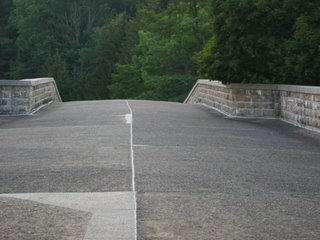

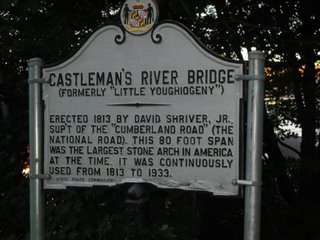
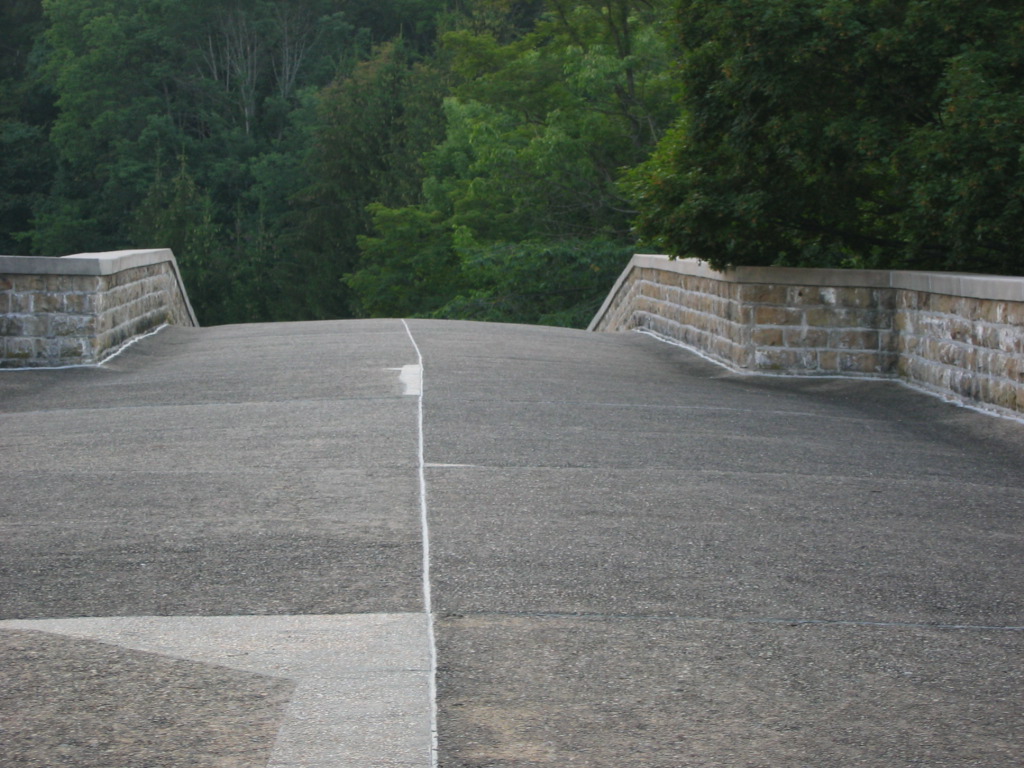


Tuesday, September 12, 2006
Looking through a different pair of eyes
A recent trip to Knoxville and a factory I encountered there gave me pause to consider two professors from graduate school, and how they forever changed the way I looked at towns, cities, as well as rural areas. From Donald Krueckeberg, with whom I studied the history of planning, I learned about the evolution of urban planning. But perhaps more important, was the intangible thing I learned, to look at a city, for example, with an eye towards what the physical form of the city tells me about its history. By physical form, I am talking about anything that was built by man as well as where it is located, on the Tennessee River in Knoxville’s case.
Bob Beauregard, who had a background in architecture in addition to his degrees in planning, taught me to appreciate architecture with a little bit of history thrown in. The class in question was actually a one-time seminar he taught. One of the more memorable classes were two -- we met for three hours a week – where he showed us slides he had taken around Philadelphia and environs. He showed us the slides and talked about architecture. I never looked at buildings the same way again.
What do these men have to do with a factory in Knoxville? I'll tell you. Shortly after we arrived in Knoxville, we arrived we went for a walk through a section of the city that the magazine in our hotel room referred to as “old town.” A working set of freight rail tracks formed a sort of boundary on the edge of this residential/shopping/restaurant district. As we approached the rail tracks, I saw this working factory, the White Lily Flour Company. A working factory in the middle of Knoxville. I was blown away, because I wasn’t expecting it.
Sometime later, a quick search of the web revealed that the White Lily Flour Co. has been in business since at least 1883, making "light" flour. I believe that we had bisuits made with White Lily flour while we were in Knoxville. A delight, and they did indeed seem "lighter.
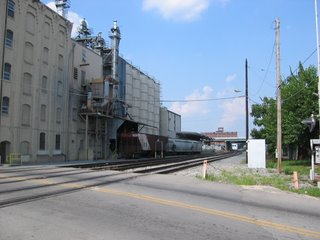
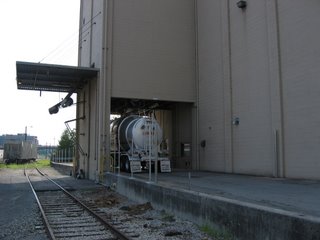
The entire factory complex made a distinct impression on me. I’m not sure why. I’ve seen many factories over the years. Perhaps it was because we had just driven 700 miles. Perhaps it was because about one-half to three-quarters of mile away was our hotel just across the street from several office buildings. Perhaps it was because in other smaller to mid-sized cities factories both larger and smaller then the White Lily Flour Co. factory have been demolished to make way for new development. In any case, I am glad that I had my digital camera with a charged battery, so I could take some pictures. And I thought about both Profs Beauregard and Krueckeberg who taught me to look at cities with a different set of eyes.
I would have seen the factory even if I had never encountered Profs. Krueckeberg and Beauregard. But the lessons I learned, including looking at buildings and surrounding infrastructure with a different pair eyes stay with me to this day. I saw this factory and I thought of both of these wonderful men. I was excited because I saw something special with a different set of eyes.
Bob Beauregard, who had a background in architecture in addition to his degrees in planning, taught me to appreciate architecture with a little bit of history thrown in. The class in question was actually a one-time seminar he taught. One of the more memorable classes were two -- we met for three hours a week – where he showed us slides he had taken around Philadelphia and environs. He showed us the slides and talked about architecture. I never looked at buildings the same way again.
What do these men have to do with a factory in Knoxville? I'll tell you. Shortly after we arrived in Knoxville, we arrived we went for a walk through a section of the city that the magazine in our hotel room referred to as “old town.” A working set of freight rail tracks formed a sort of boundary on the edge of this residential/shopping/restaurant district. As we approached the rail tracks, I saw this working factory, the White Lily Flour Company. A working factory in the middle of Knoxville. I was blown away, because I wasn’t expecting it.
Sometime later, a quick search of the web revealed that the White Lily Flour Co. has been in business since at least 1883, making "light" flour. I believe that we had bisuits made with White Lily flour while we were in Knoxville. A delight, and they did indeed seem "lighter.
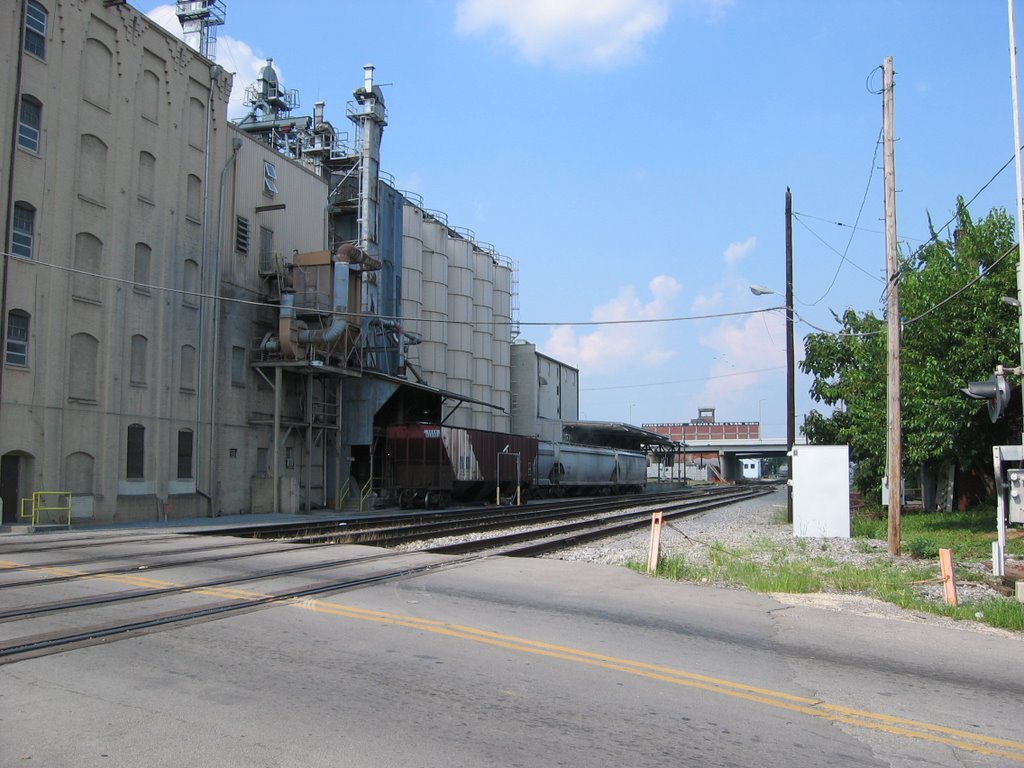

The entire factory complex made a distinct impression on me. I’m not sure why. I’ve seen many factories over the years. Perhaps it was because we had just driven 700 miles. Perhaps it was because about one-half to three-quarters of mile away was our hotel just across the street from several office buildings. Perhaps it was because in other smaller to mid-sized cities factories both larger and smaller then the White Lily Flour Co. factory have been demolished to make way for new development. In any case, I am glad that I had my digital camera with a charged battery, so I could take some pictures. And I thought about both Profs Beauregard and Krueckeberg who taught me to look at cities with a different set of eyes.
I would have seen the factory even if I had never encountered Profs. Krueckeberg and Beauregard. But the lessons I learned, including looking at buildings and surrounding infrastructure with a different pair eyes stay with me to this day. I saw this factory and I thought of both of these wonderful men. I was excited because I saw something special with a different set of eyes.
Subscribe to:
Posts (Atom)